
Manuka
My interest in Tasmania’s wild places is probably obvious. The more remote and untamed the better, but accessing these remote corners can be a logistical challenge. While kayaks and packrafts have helped me reach some remote parts of the state, I’ve longed for something that offers greater range without relying on third parties. Their availability and the need for pre-booked trips limits flexibility.
Alongside making videos and trip reports of my own adventures, I’ve become an avid consumer of others’ expedition write-ups and videos. These stories have inspired many of my trips and opened my eyes to opportunities I’d never considered.
Somehow, YouTube started recommending sailing dinghy videos. I’m not sure which came first, but soon I was hooked—watching Mat Conboy’s Small Craft Tasmania channel (and falling for the little Scamp dinghy), and following Geoff Macqueen’s journey down the west coast in his 13' Welsford Houdini, Dinghy Spart*. These put ideas in my head that this was something I could do too, although my timeline was thinking about this as something to pursue in retirement when I hoped to have more time and money for such endeavours—still many years away.
While daydreaming about sailing dinghies, I’d apparently been sharing my thoughts with Colin, though I don’t recall him reciprocating my enthusiasm. However, on August 13, 2025, Facebook recommended a marketplace listing for a 16’ Hartley TS16 sailing dinghy priced at $4,500. I sent it to Colin on a whim.
I had no serious intention of buying this boat. I was completely unfamiliar with boats and had no idea about the merits or otherwise of this particular model. I certainly wasn’t qualified to assess its seaworthiness and it didn’t align with my existing timeline. Nevertheless, upon seeing the Facebook ad, Colin immediately suggested we buy it! The price, especially split equally, seemed too good to resist.
At the time, I was working in St Helens, so even looking at the boat wasn't really an option for me, with it being located in Hobart. However, Col was so enthusiastic, he contacted the seller that day and arranged to look at the boat. That initial visit got him even more excited, and he organised to go for a test sail with the owner on the weekend—which I also couldn't make as I was heading away to Strathgordon for the weekend with my friend Anita.
So, it was sitting in the restaurant at the Pedder Wilderness Lodge I learnt that I was a boat owner for a boat I'd never even seen! I transferred Col my half of the purchase price that day and he paid for the boat, although he arranged for the current owner to hold it for another week so that he could take us both for a sail the following weekend.
Meeting Manuka
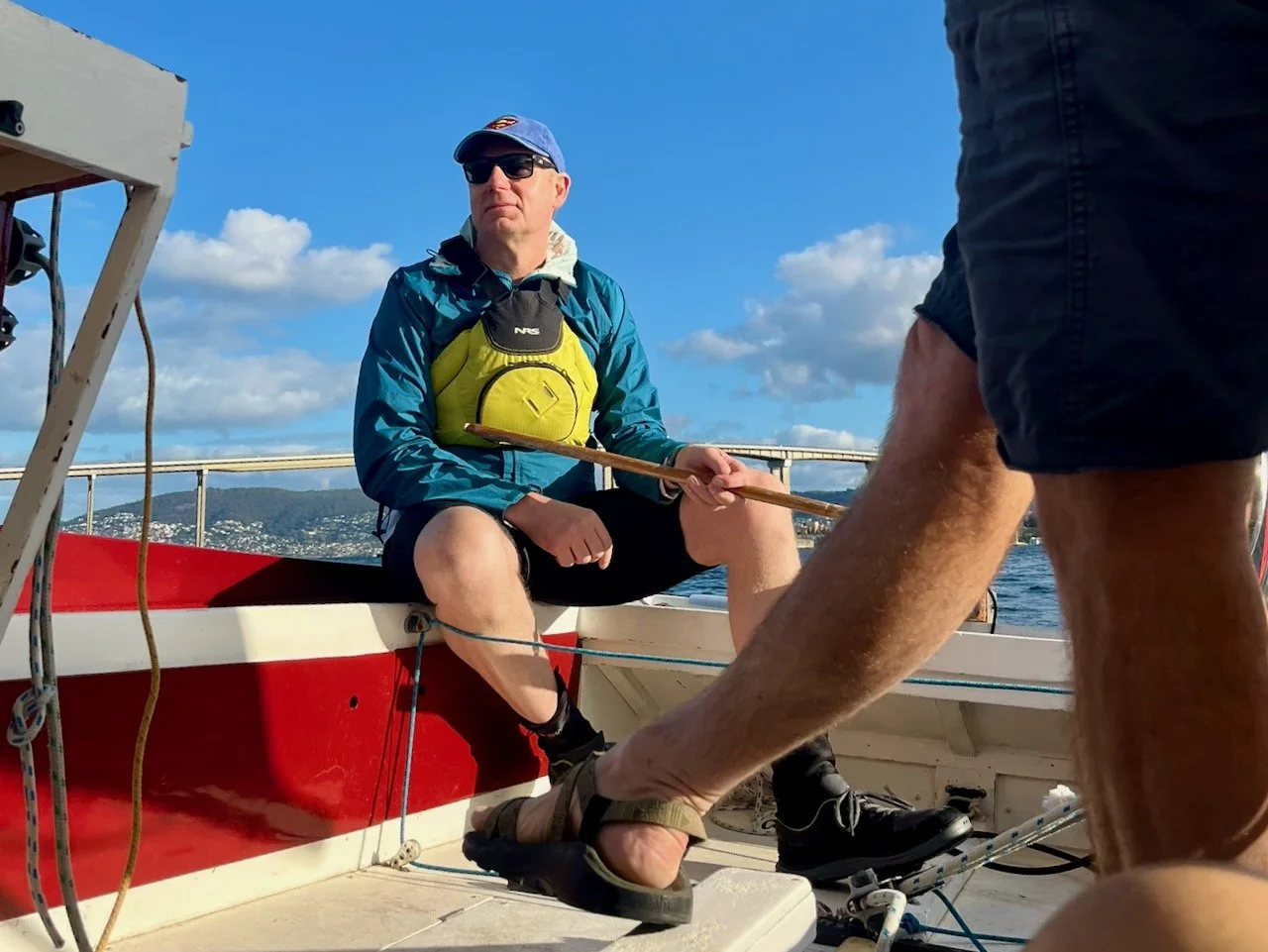
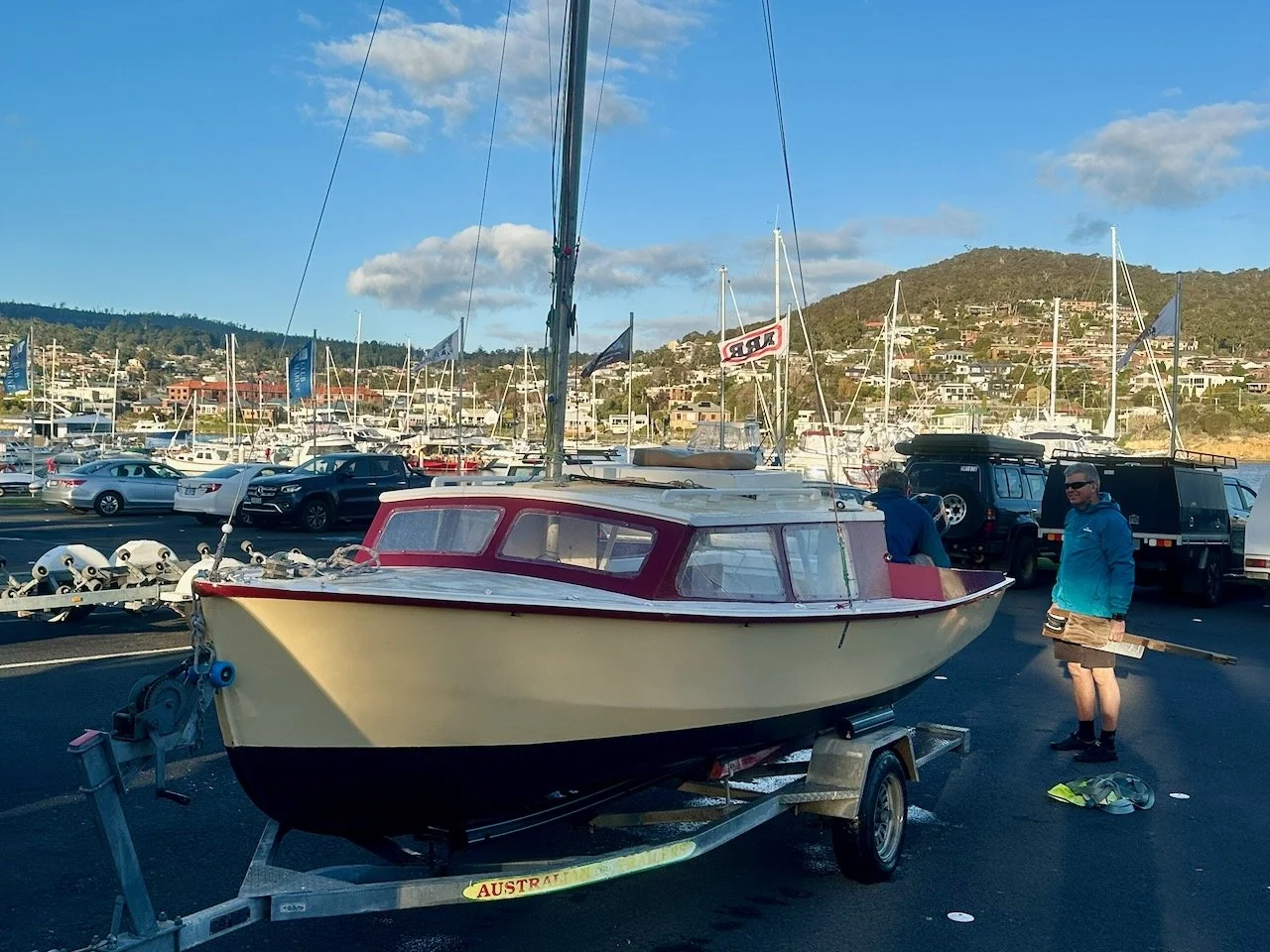
On Saturday the 23rd of August 2025, Col and I drove over to the Lindisfarne Yacht Club to meet Tim and take delivery of Manuka. Tim showed us how to set the boat up—we had no idea—with Col video recording the process so we'd have some record. We then went for a 1½ hour sail, before leaving with the boat—our one and only introductory sailing lesson!


Going Electric
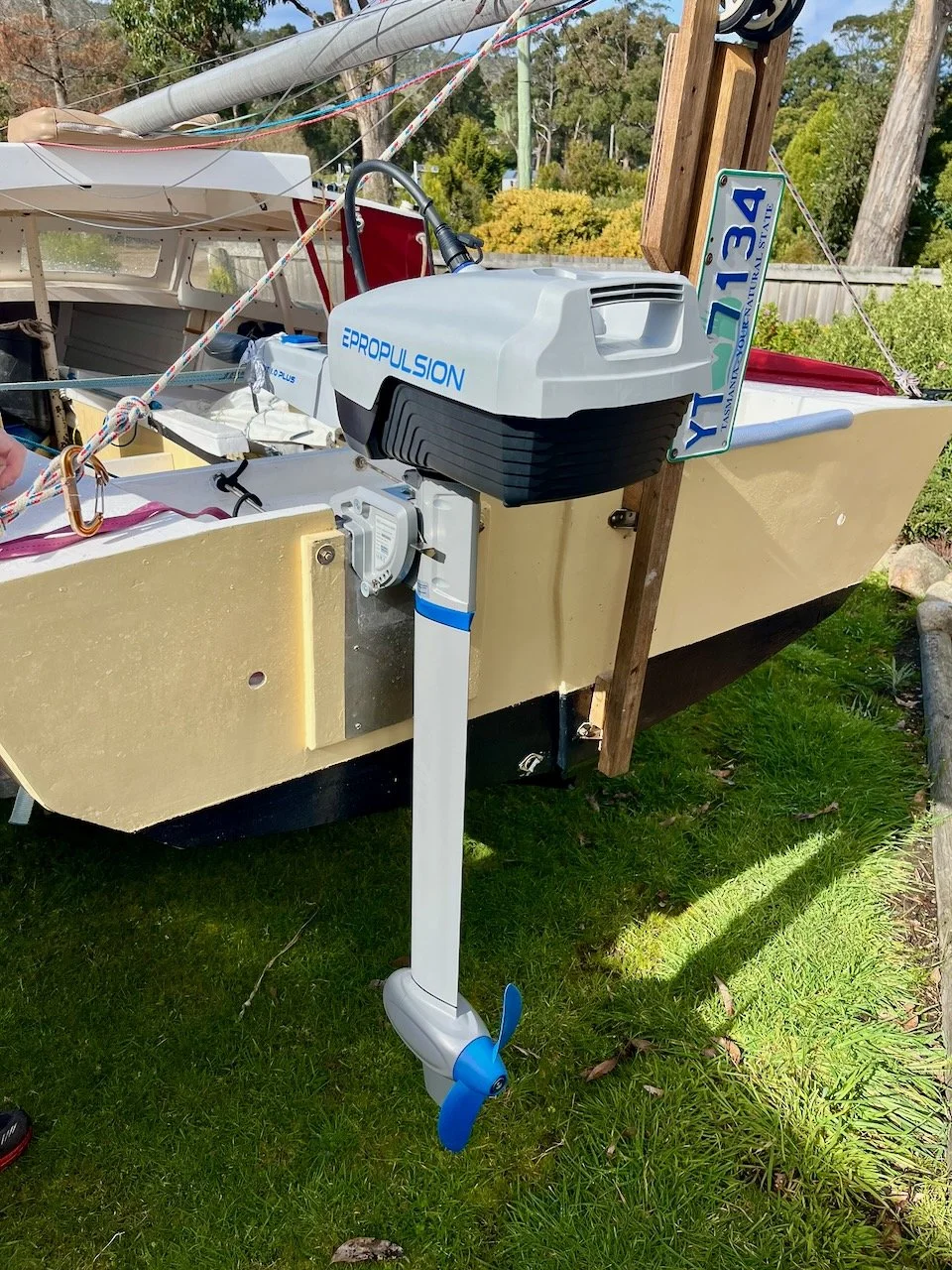
Manuka didn’t come with a motor; Tim had decided to keep the 4hp Tohatsu outboard. So, before we could use the boat, we needed to buy a motor—essential for getting to and from the boat ramp. I wasn’t keen on a petrol outboard. The noise and smell seemed at odds with the wild places we wanted to visit. After some research and recommendations from Small Craft Tasmania, I convinced Col to go electric. We settled on the ePropulsion Spirit 1.0 Plus—twice the price of a petrol outboard, but worth it for the peace and quiet.


First Outing
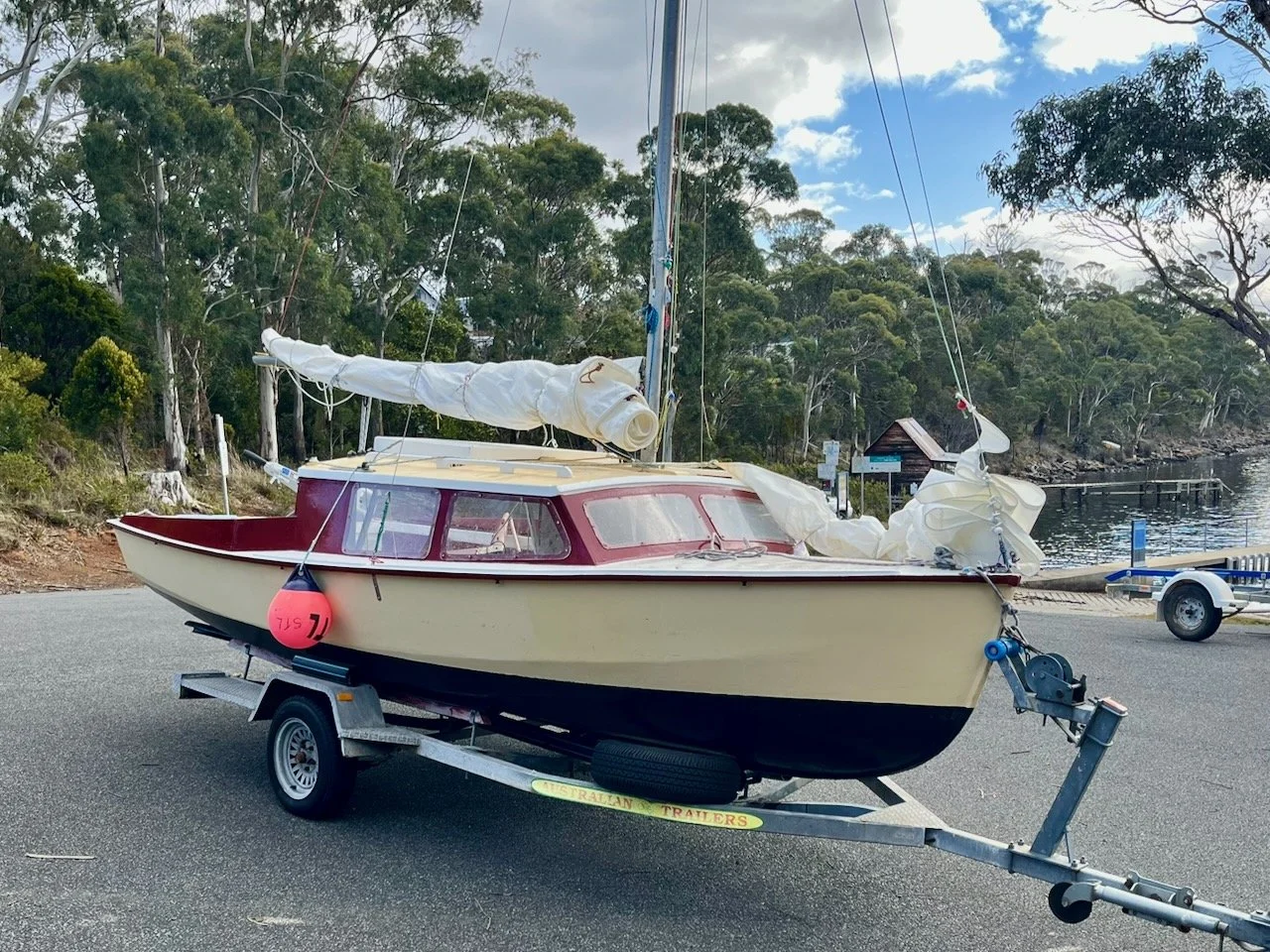
In September, Col and I both had some leave, so taking Manuka out was a no-brainer—though we’d never sailed her ourselves. Our first plan was Lake St Clair, combining boating with hiking, but the weather had other ideas. With Tasmania’s infamous spring winds and warnings for bushwalkers, we opted for Verona Sands instead. Col’s family has a shack there, and the area offers plenty of sheltered water for novice sailors.
We headed down on the morning of 5 September and got ourselves setup at the shack. With only the afternoon remaining that day, and having never taken the boat out by ourselves, we decided on a conservative test motor around the boat ramp from Charlotte Cove.
Following the video recording Col had made of Tim setting the boat up (which we've since converted to shorter note), we set Manuka up at the ramp and put her into the water—so far so good! We set out from Charlotte Cove and into Garden Island Bay, on the protected side of Garden Island, testing the motor at different power settings.
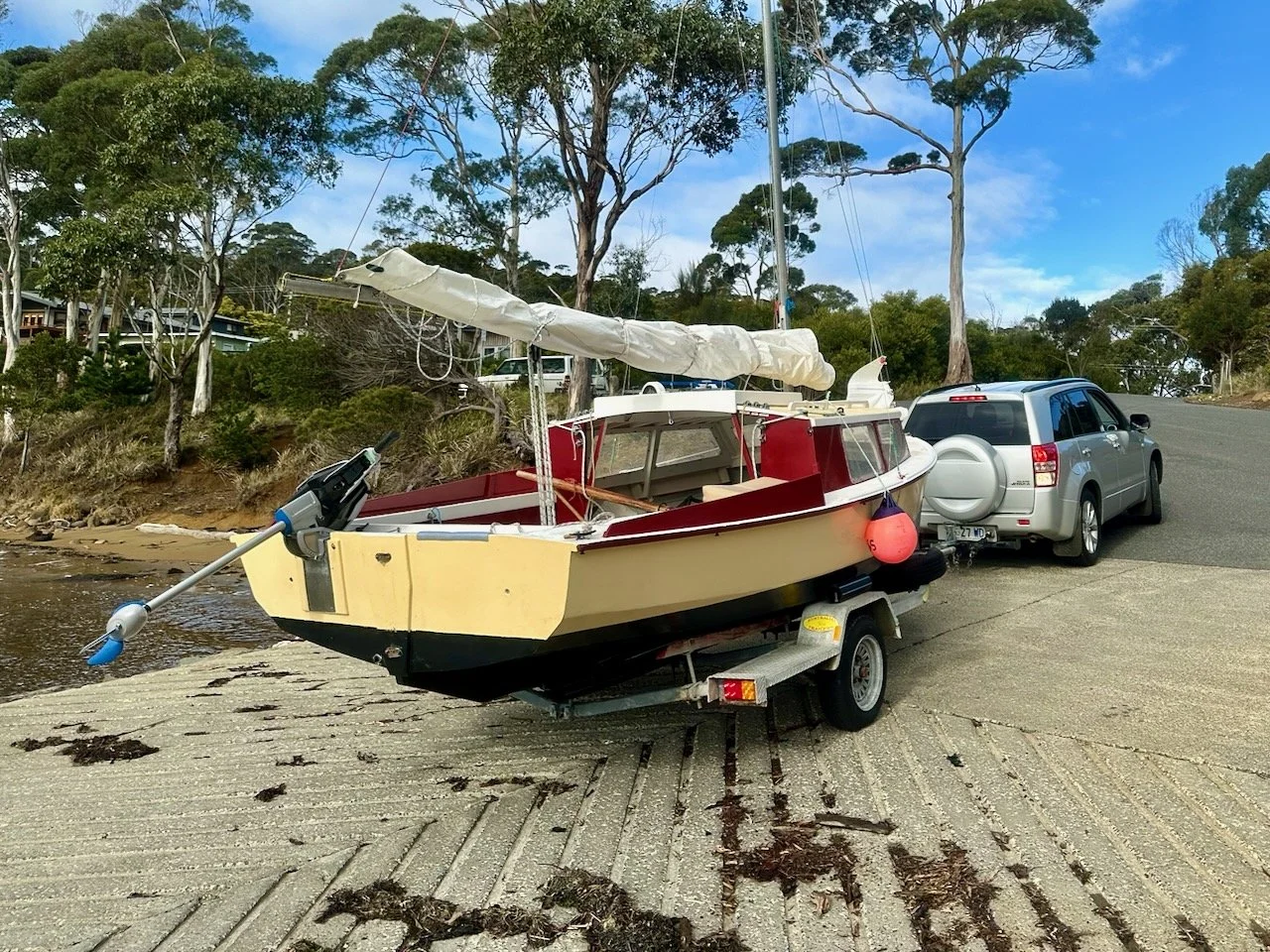
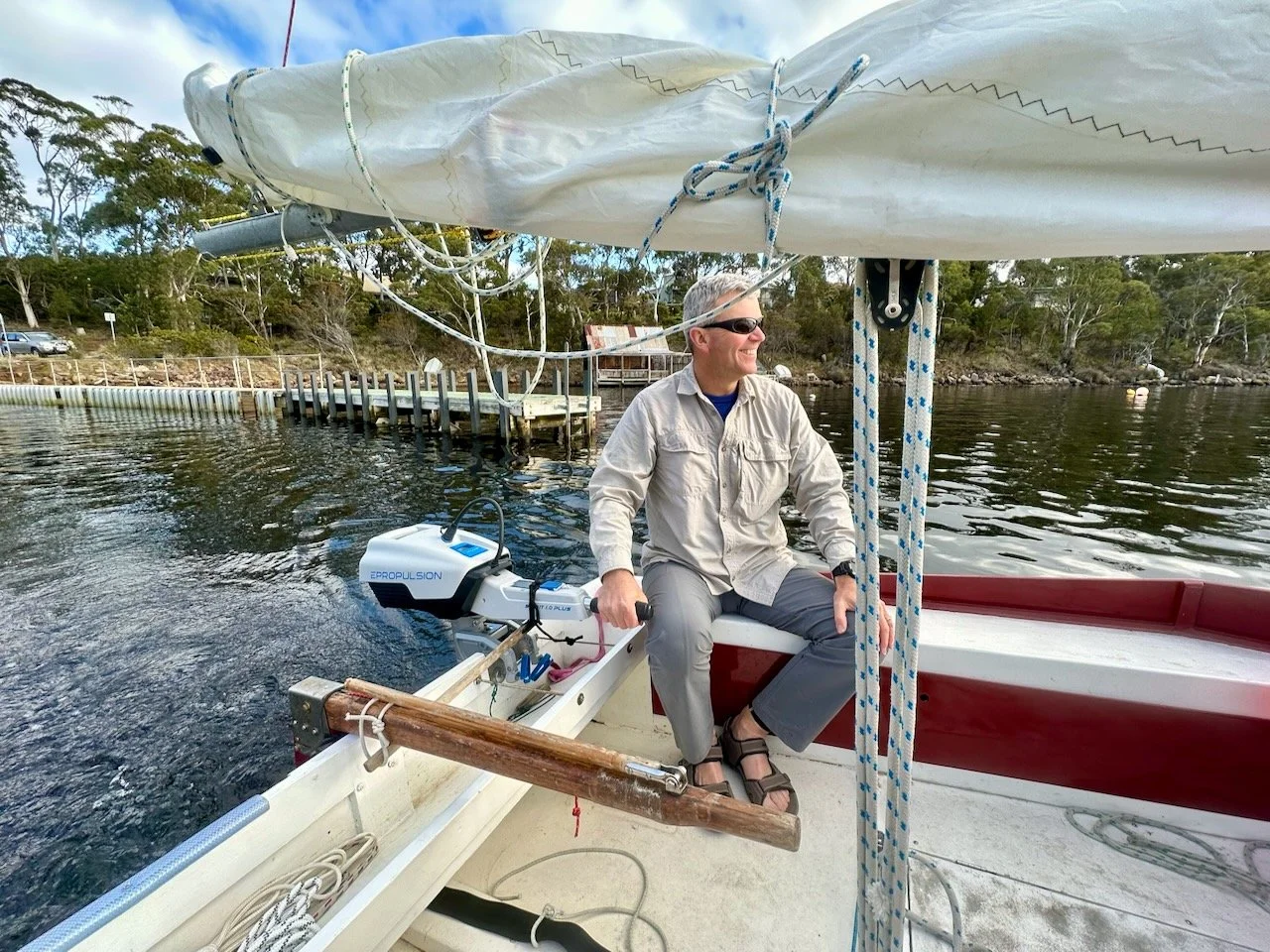
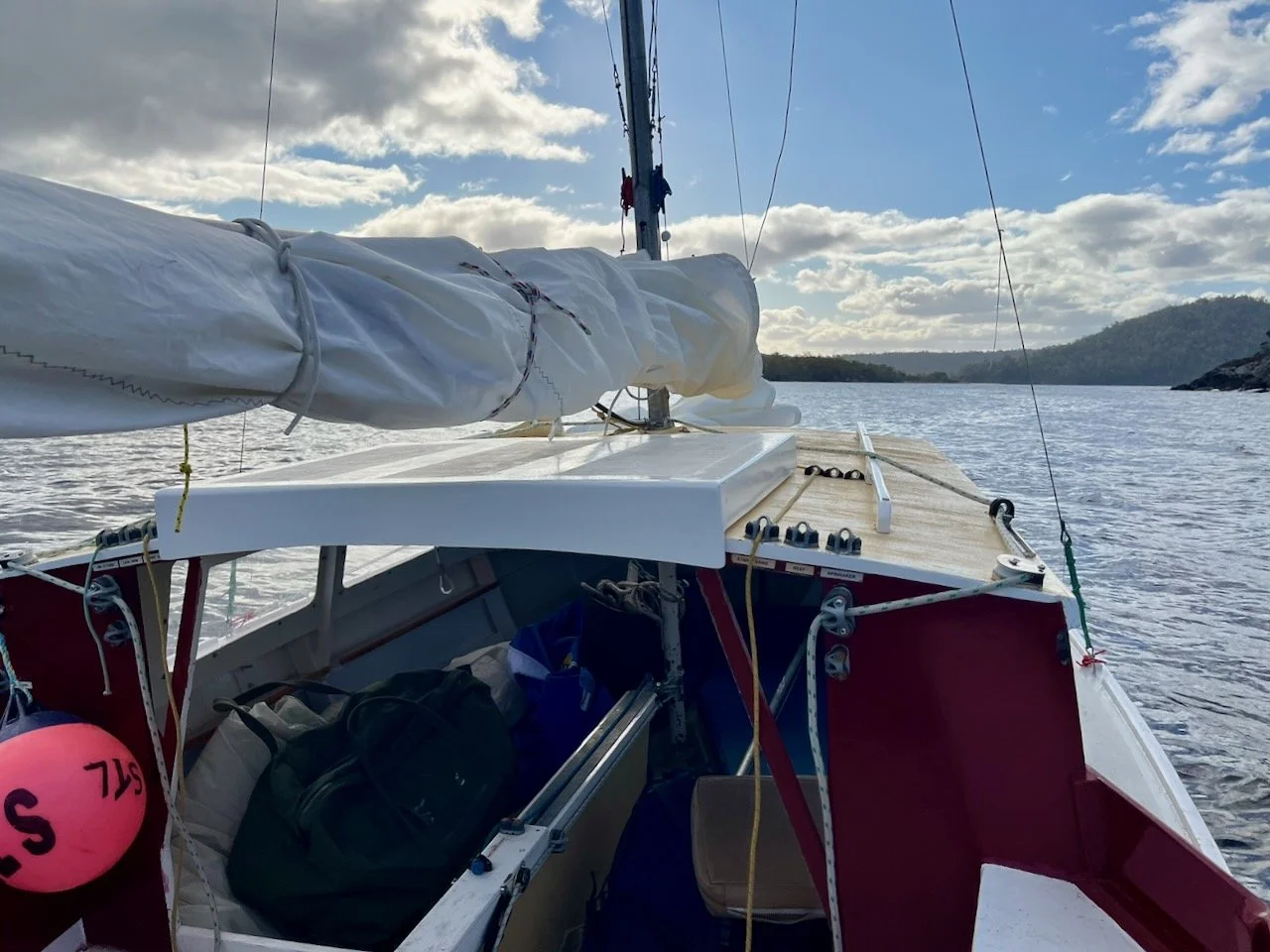
While I'd been convinced electric was the way to go, several people had tried to talk us out of it, mainly due to concern about range. So on this first outing we cautiously monitored what different power settings meant for how long the battery would last. I think we did the initial part of the trip at about 250W (with the motor having a maximum output of 1000W). This gave us a speed of about 3 knots in the protected waters of the bay.
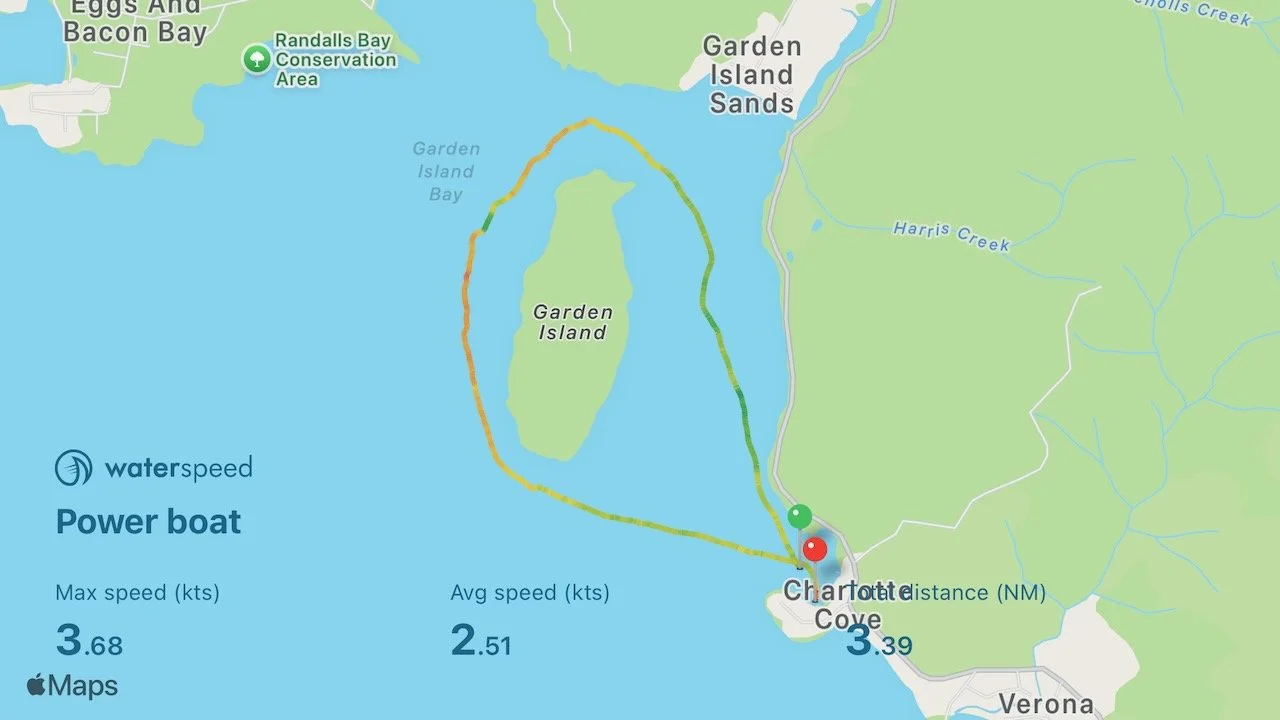
Despite Col's trepidation, I convinced him to circumnavigate Garden Island, which would put us into more swell. As we rounded the northern end of the island our speed decreased to a little above 2 knots. Increasing the power on the motor saw us reclaim the lost speed, but also saw the battery indicator reduce faster. However, we'd bought the boat to enjoy nature, not to race around, so we were content to putter along at the reduced speed.
It took us an hour and twenty minutes to complete out circumnavigation of the island and to return to the boat ramp, a trip of 3.4 nautical miles at an average speed of 2.5 knots in 8 knot southwesterly winds. A successful first outing!
First Sailing
After our maiden voyage, we were keen to try sleeping on the boat, so we planned an overnight trip to Alonnah on Bruny Island. The Bruny Island Boat Club’s website said you could tie up at the pontoon overnight for $5. But, once again, the weather had other plans. With a windy forecast for Sunday, we settled for a day sail.
We set out from Charlotte Cove on the Saturday morning, hoping for a proper sail, but a 2-knot northerly wasn’t much help. We motored towards Alonnah, keeping a close eye on the battery. Even at low power, we managed a decent average speed of 3.7 knots. We put the sails up and motor-sailed for a while, but the wind never really picked up. Still, we made the 5.5 nautical mile trip to Alonnah with battery to spare.
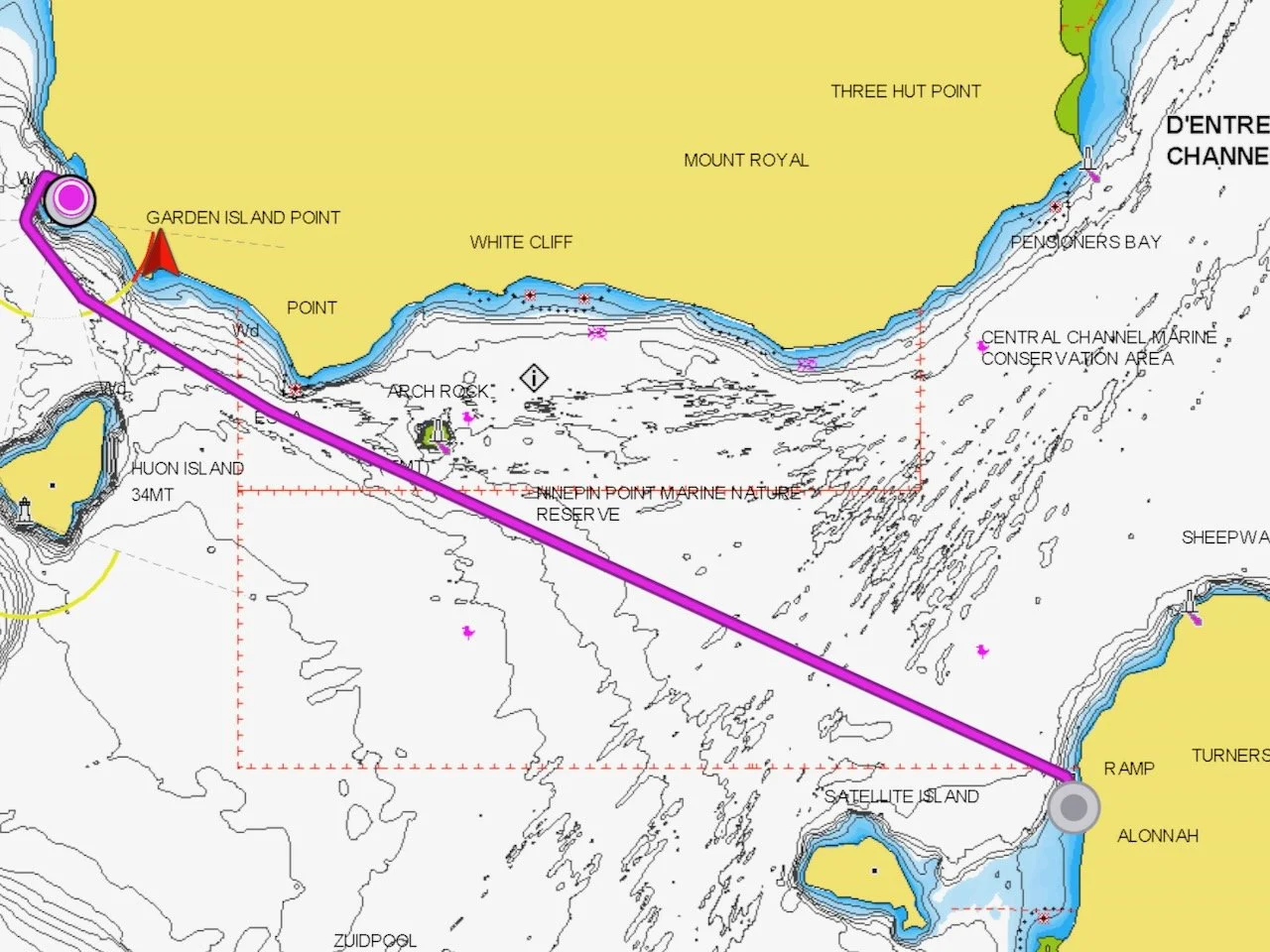
Docking at the pontoon was a challenge—controlling a boat in a tight space with an outboard is trickier than it looks. I think Col was wondering what on earth I was doing, but we eventually tied up. After securing Manuka, we walked to the pub in Alonnah and had a pleasant lunch before returning to the boat.
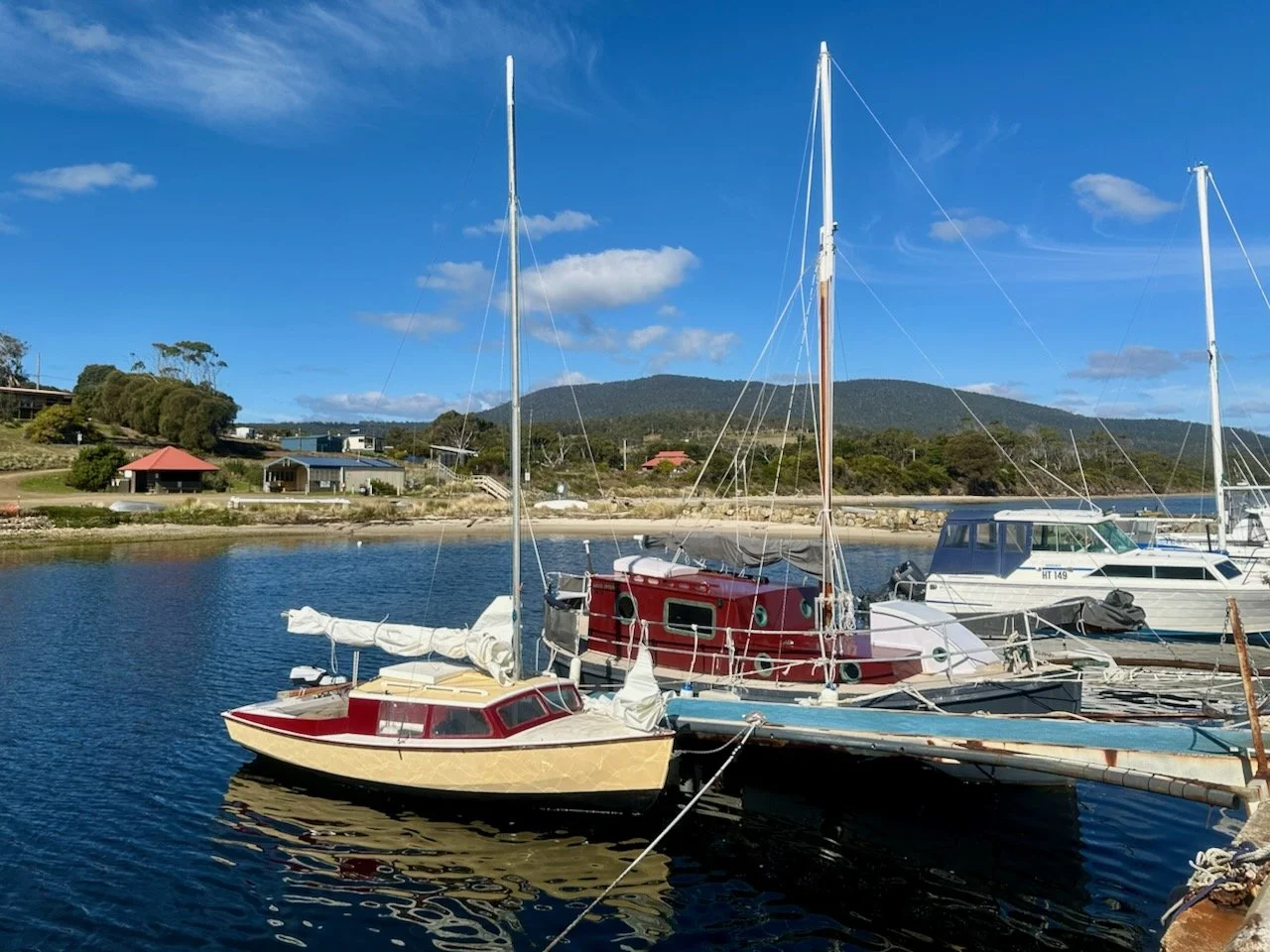

Col motored us out, and to make me feel better about my parking, his own efforts to leave the marina were equally entertaining.
Once in open water, the wind picked up a little, and we managed to sail most of the way back, averaging 3.2 knots and hitting a max of 4.9 knots. There were plenty of lulls, but we were sailing—on our own!
Building Experience
We stayed at Verona Sands a few more days, but the weather wasn’t great for another outing. I headed back to Hobart, while Col stayed on. On Wednesday, we met at Dru Point near Margate for another sail. This time, in 7-knot southwesterlies, we sailed 7.5 nautical miles up and down North West Bay, hitting a top speed of 6.2 knots in the gusts.
This outing boosted our confidence, and we are both looking forward to using Manuka to access even wilder places—when time and weather allow.
_____
* Geoff has now published a book on his travels in Dinghy Spart, which includes circumnavigating Tasmania and crossing Bass Strait: Cruising Wild.