
Overnight Sailing from Swansea to Coles Bay
Since our first outings in Manuka back in September, Col and I really hadn’t had much time to get out on the water. We managed one brief—and fraught—outing in early November where we managed to bend the mast on an overhanging tree branch at the Tinderbox boat ramp. Not our finest hour! So heading into some leave in late November, with the mast now straightened, we were keen for a proper adventure. Something smooth and redemptive.
We’d originally planned again to head up to Lake St Clair. The forecast looked promising only for the Tuesday, with a cold overnight period rolling into snow by Wednesday night and Thursday. Not ideal for a little sailboat and even less ideal for two people hoping for a pleasant overnight trip.
This is usually the point where I’d open the DarkSky weather map on the web, check where in the state the weather would be kindest, and plan the trip accordingly. Unfortunately, DarkSky disappeared when Apple purchased the company some time ago, and I’d never really found a replacement. So after some ChatGPT-driven research, I landed on Windy.com and Ventusky as solid alternatives. Both apparently present similar-quality data, but Ventusky’s subscription was cheaper, so I went with that.
Ventusky showed that the only stretch of southern Tasmania likely to see decent weather—meaning little rain and reasonable winds— that was also in a smooth water zone was the top of Great Oyster Bay between Swansea and Coles Bay. So that became the plan.
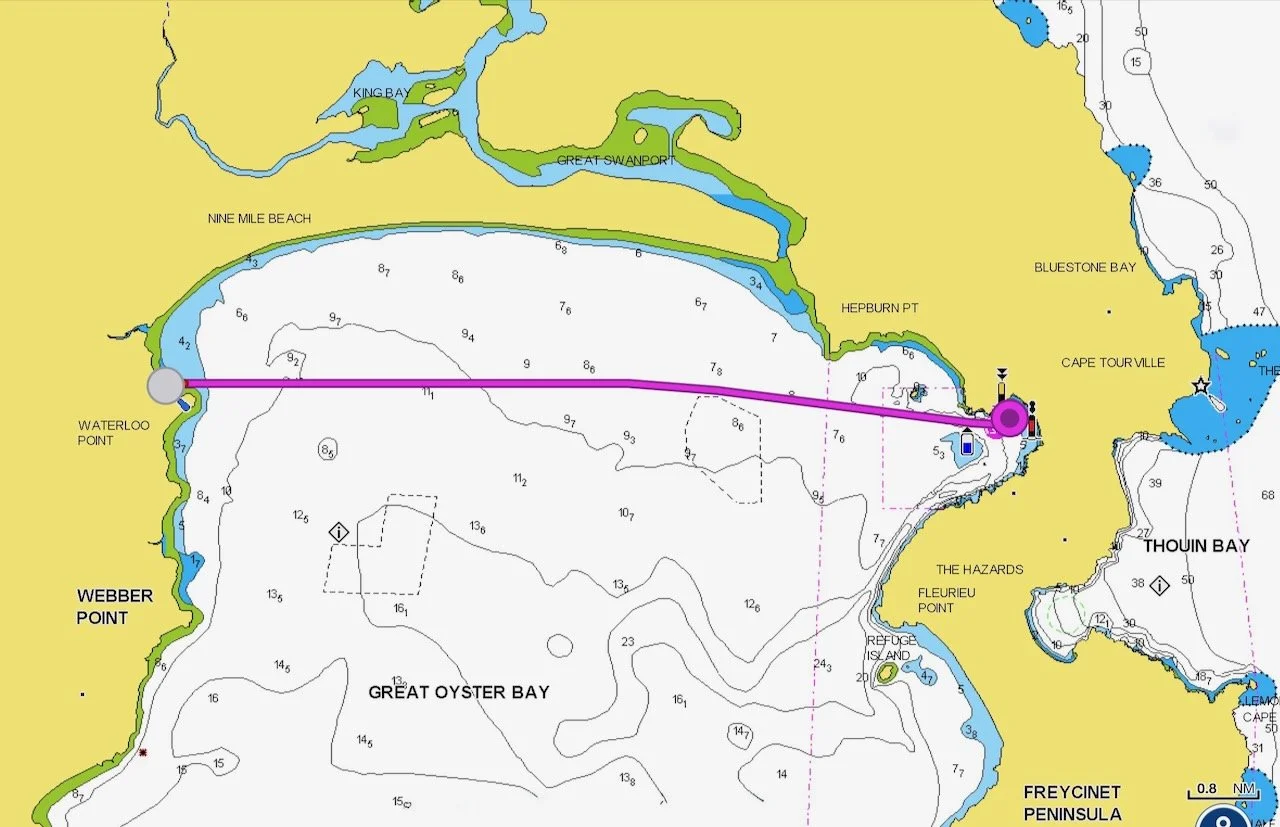
Departure Day (Tuesday 25 Nov)
It was raining Tuesday morning, so rather than rushing, we decided on a late-morning departure. According to the forecast, the rain would ease by mid-afternoon. On the drive up, we checked the Deckee app; conditions were flagged as potentially unsafe (yellow) during the middle of the day but easing to “stay alert” (green) later. That seemed manageable.
We arrived in Swansea, had a coffee, and headed to the boat ramp a little after 4pm—feeling optimistic, if slightly cautious.
That optimism evaporated briefly when we backed the trailer into the boat ramp and realised the tide was out. We hadn’t checked the tide because we didn’t know it mattered here. Turns out the sand washes into the bottom of the ramp, reducing the incline at low tide. So backing the trailer to the usual point left Manuka stubbornly stuck on the trailer. We backed further, but started worrying about getting the rear of the car underwater. With a few incoming waves and some shoving, she finally floated free… but with the terrible sound of splintering timber!
We’re still not sure what broke, but think it was the weight of the boat sitting on one of the rubber coated timber rails of the trailer. The rail looks like it has a split in it, so we’re hoping it is just the rail and not the boat. We inspected the boat as best we could, and couldn’t see any damage, or any water coming in. But there was a bit of rain water sitting in the bottom of the boat from the week-and-a-half it had spent sitting outside when we got the mast fixed. We would have to keep an eye on it!
At the jetty the wind was buffeting the boat more than expected. Deckee still showed the green “stay alert,” but the breeze felt stronger than forecast, and the swell—something I’ll admit we hadn’t really considered—was sitting around 1.6m, with significant waves up to 2m. Great Oyster Bay is open water, and it was reminding us of that.
The Sail to Coles Bay
Given the conditions, we weren’t confident enough to raise sail right away, so we motored out—slowly at first—trying to conserve battery. The westerly wind was pushing us along anyway. Eventually, we put the sail up and started making good progress. We tried a butterfly (wing-on-wing) configuration, which worked well downwind.

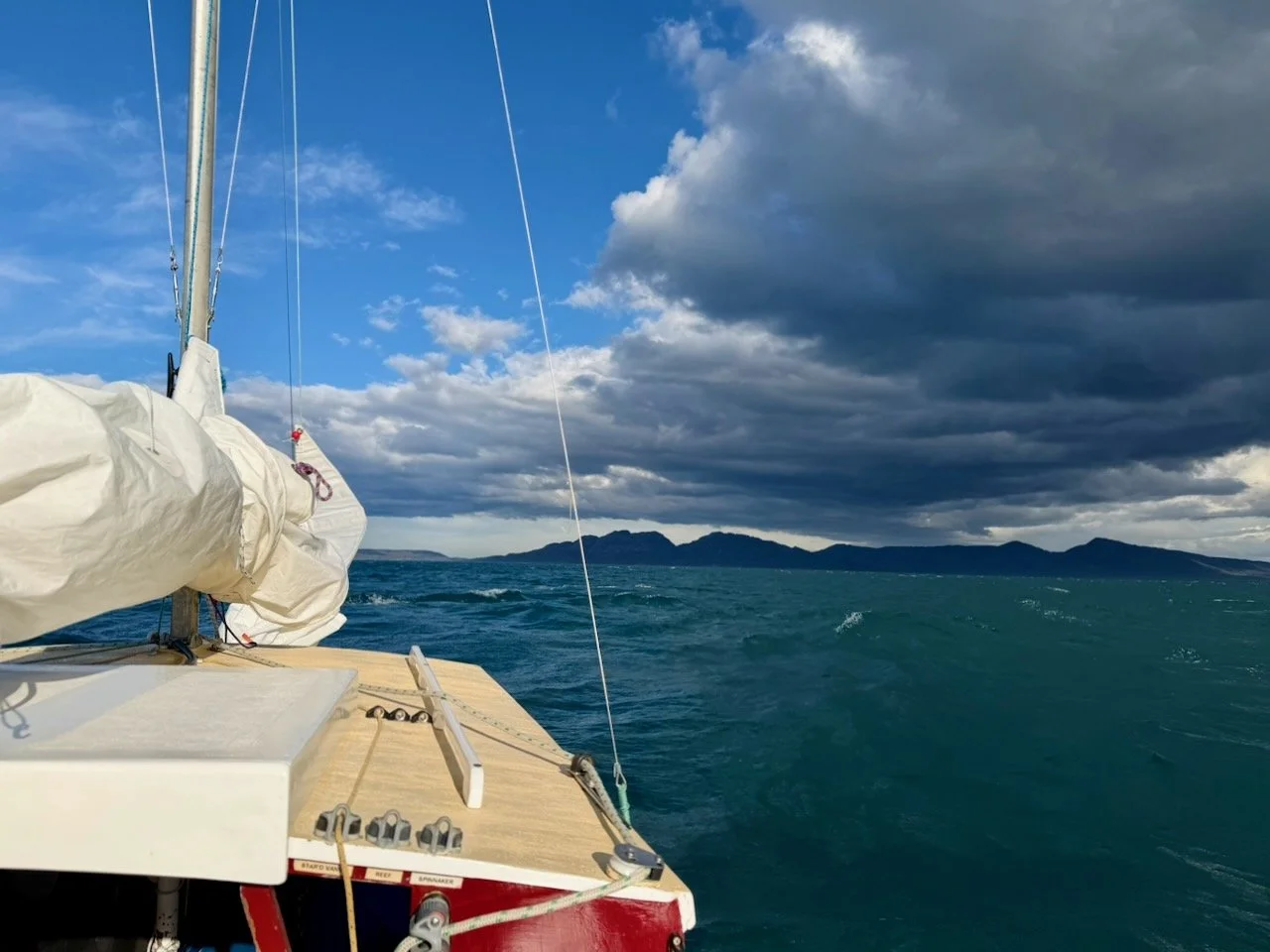


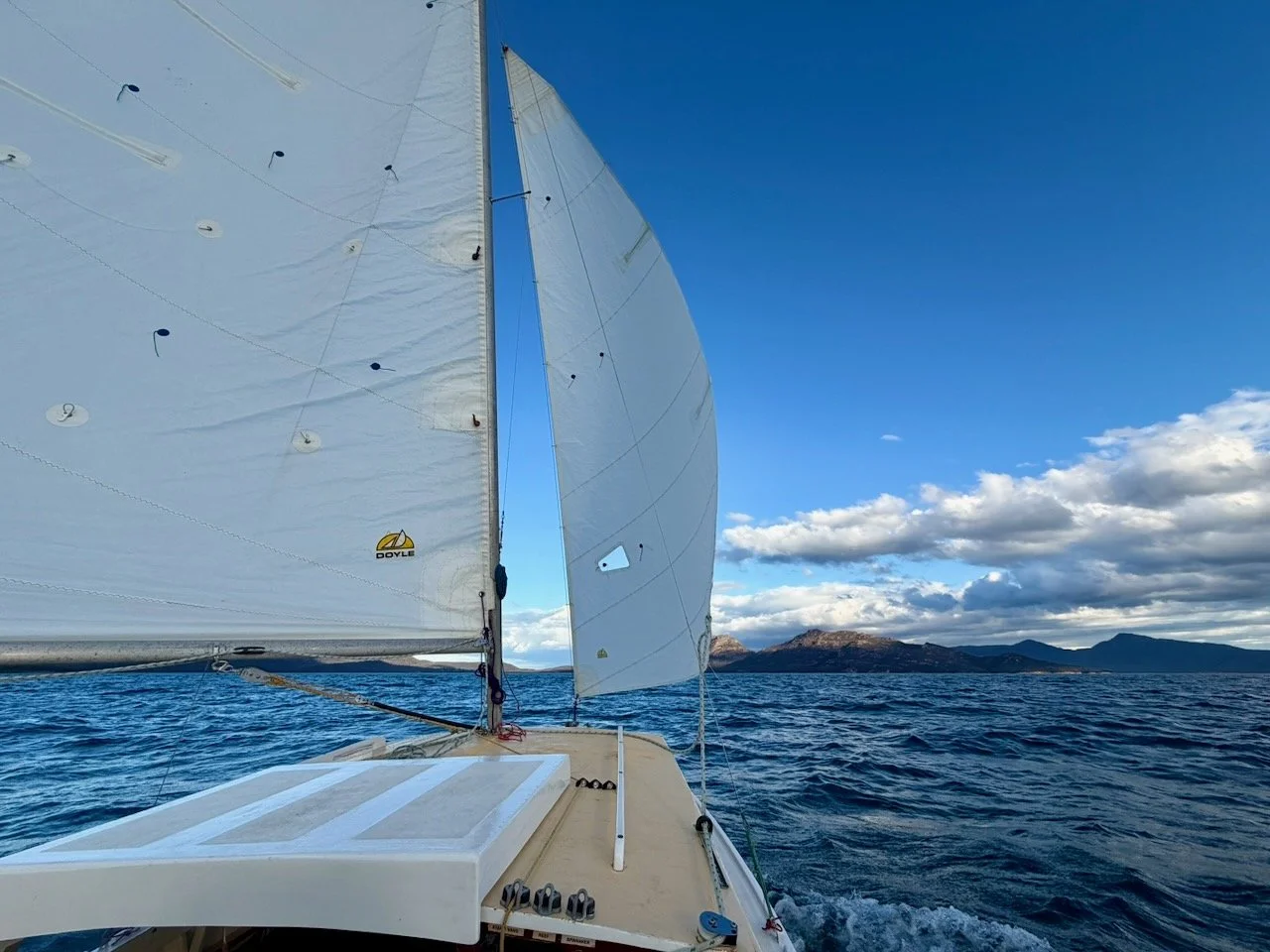
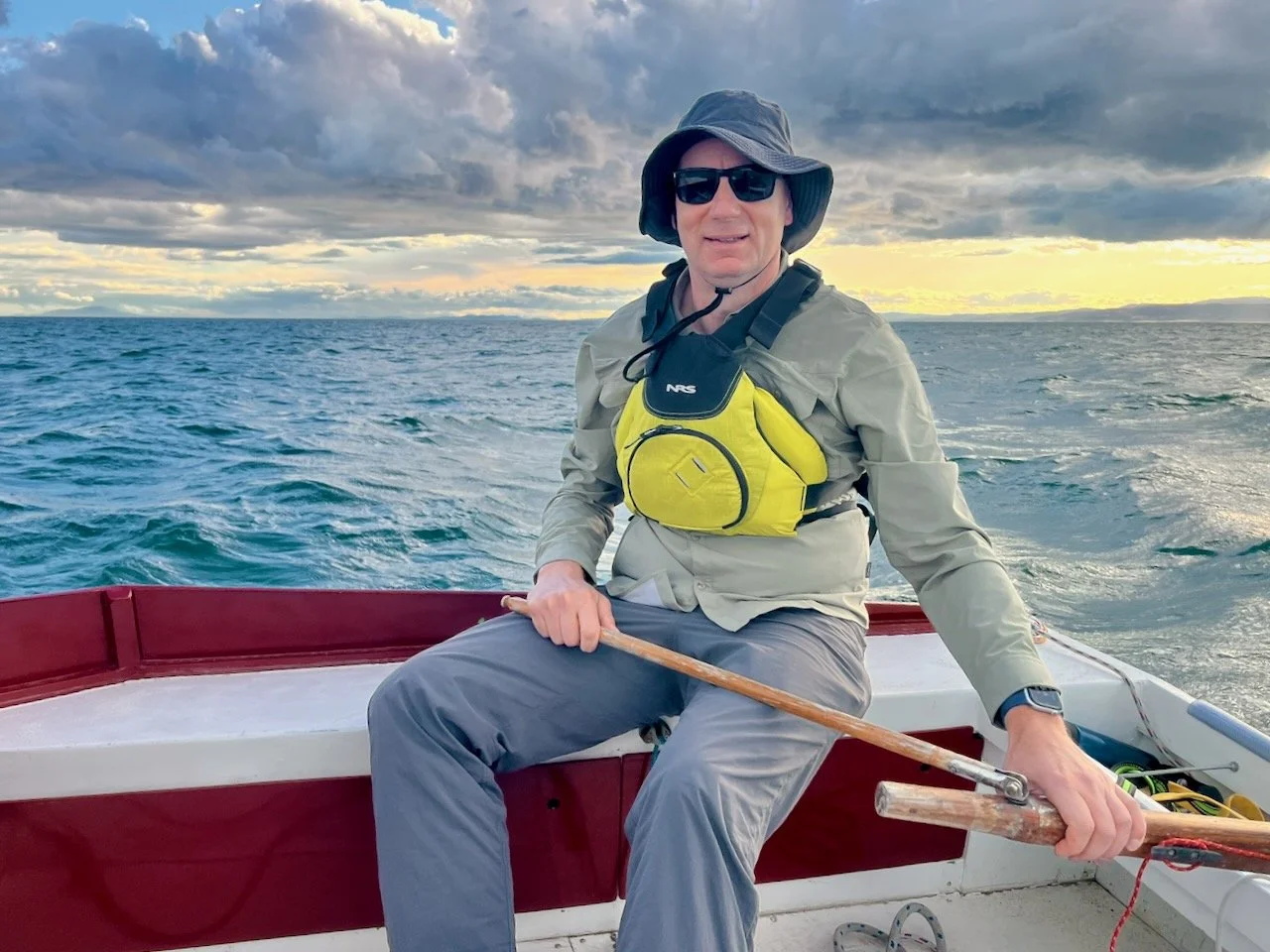
Not long after we put the sails up, I got a call from one of the local police officers at Swansea. Apparently someone had seen us depart, didn’t think the conditions were great, and questioned our maritime skill! They reported that after we had launched the boat had drifted out into Great Oyster Bay and they never saw the sails come up. Ben had gone to the ramp and checked the car rego to discover it belonged to Col. He tried Col’s phone, but it diverted to voicemail because he was on leave. But we’re predictable enough that Ben assumed I’d be with him, hence the call to my mobile. I reassured him we were fine and that we had motored our initial leg out of Swansea.
After the call though, Col and I did realise that there had been no other boats or trailers when we set out, and there was no one else on the water…
Around this time, the electric bilge pump started up and a stream of water started spouting from the bow! Thankfully it was short lived. But this made us question again the splintering sound we’d heard when we got the boat off the trailer. While the bilge pump fired up on several more occasions over the course of the trip, these occasions were hours apart, and usually after the boat had rolled significantly on some swell. Hopefully it was just the collection of rainwater being ejected!
A few hours later, as we approached Coles Bay, we dropped the sail and motored in.
Finding the sole public cruising mooring was a team effort—Col on Navionics, trying not to throw up, and me steering. He was getting pretty seasick by this point trying to read the phone in the swell. The mooring was more sheltered than the bay, but not by much; the breakwall doesn’t fully protect from westerly swell, so the motion was still active.
We tied off and started organising ourselves. Intermittently, we heard a loud vibrating noise echoing through the boat. It felt like a powerful engine running nearby. After some detective work, we discovered it was the topping lift vibrating in the wind. Dropping the boom solved it.
Then came the centreboard banging—another sound we could do without. Pulling it up fixed that too.
Col crashed almost immediately, not even bothering with his sleeping bag. I tried to settle myself, but the constant rocking made it uncomfortable. I didn’t want to cook dinner in that state, and I wasn’t that hungry anyway, so I ate a Complete Cookie I’d packed for lunch and called it a night… or tried to. I barely slept with the swell, also feeling a little seasick myself.

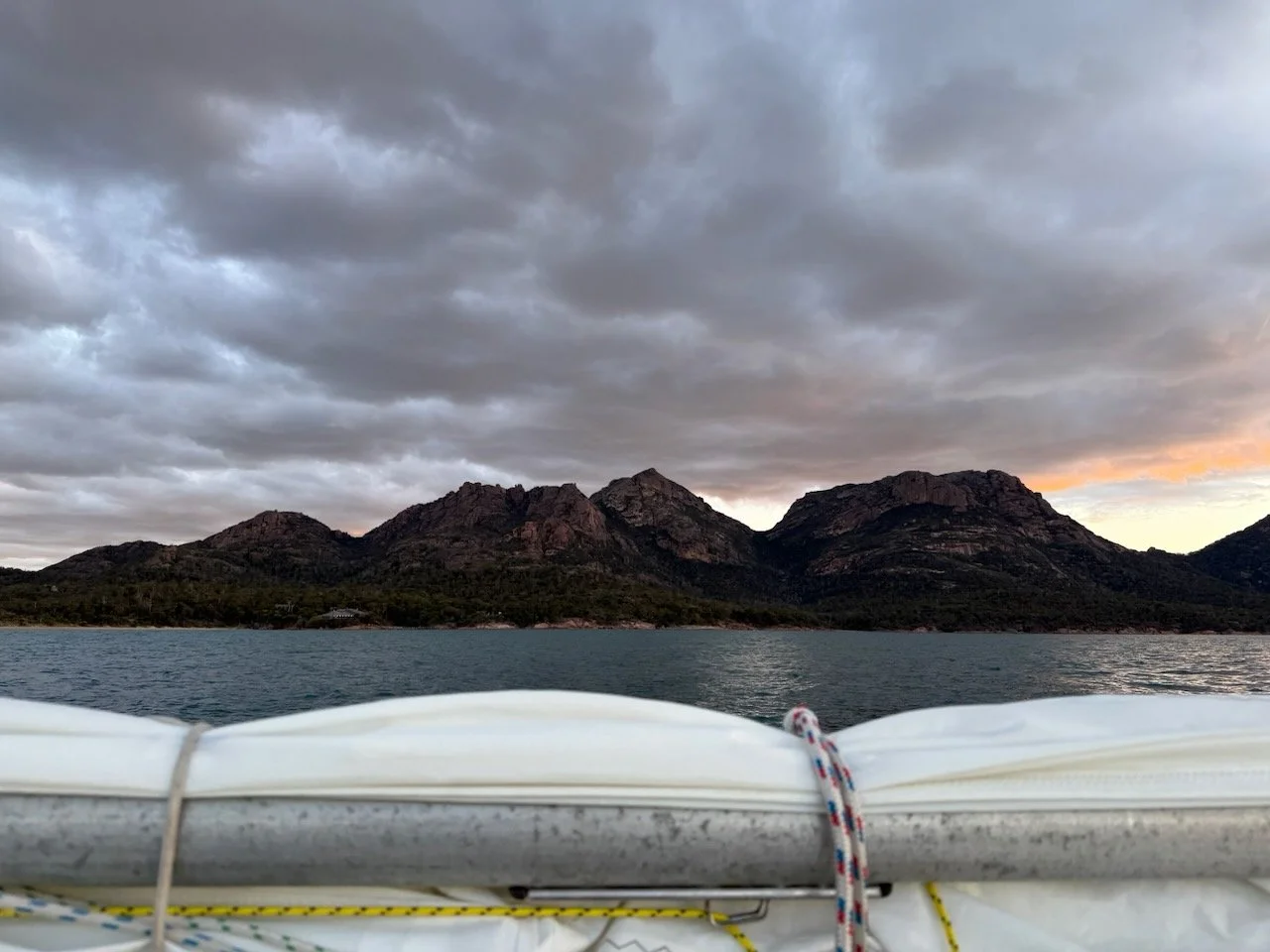
Wednesday Morning: The Return
We were up early and headed to the Coles Bay jetty for a stretch and to use the facilities. The shop wasn’t open, so no morning coffee, which was a minor blow.
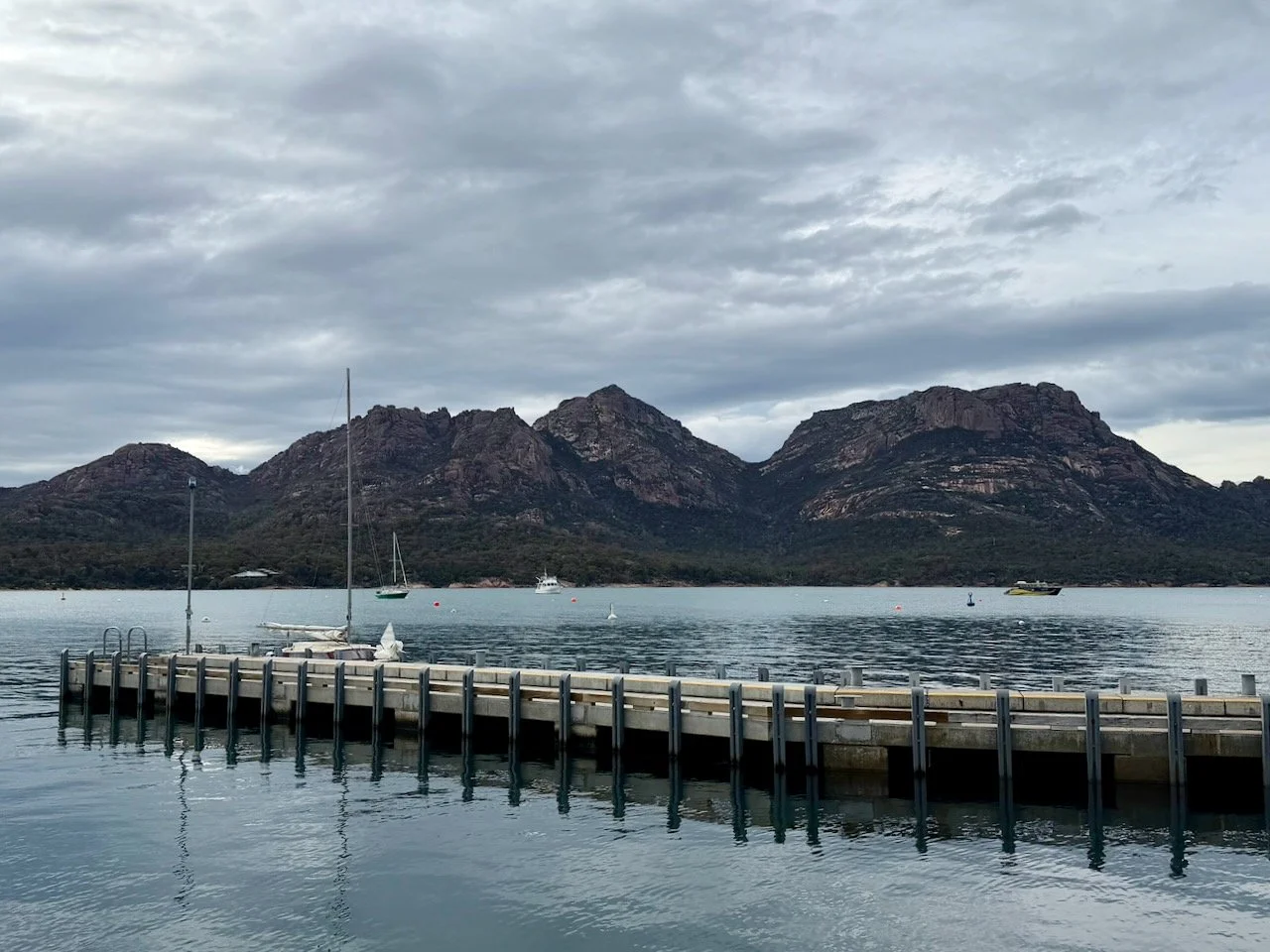
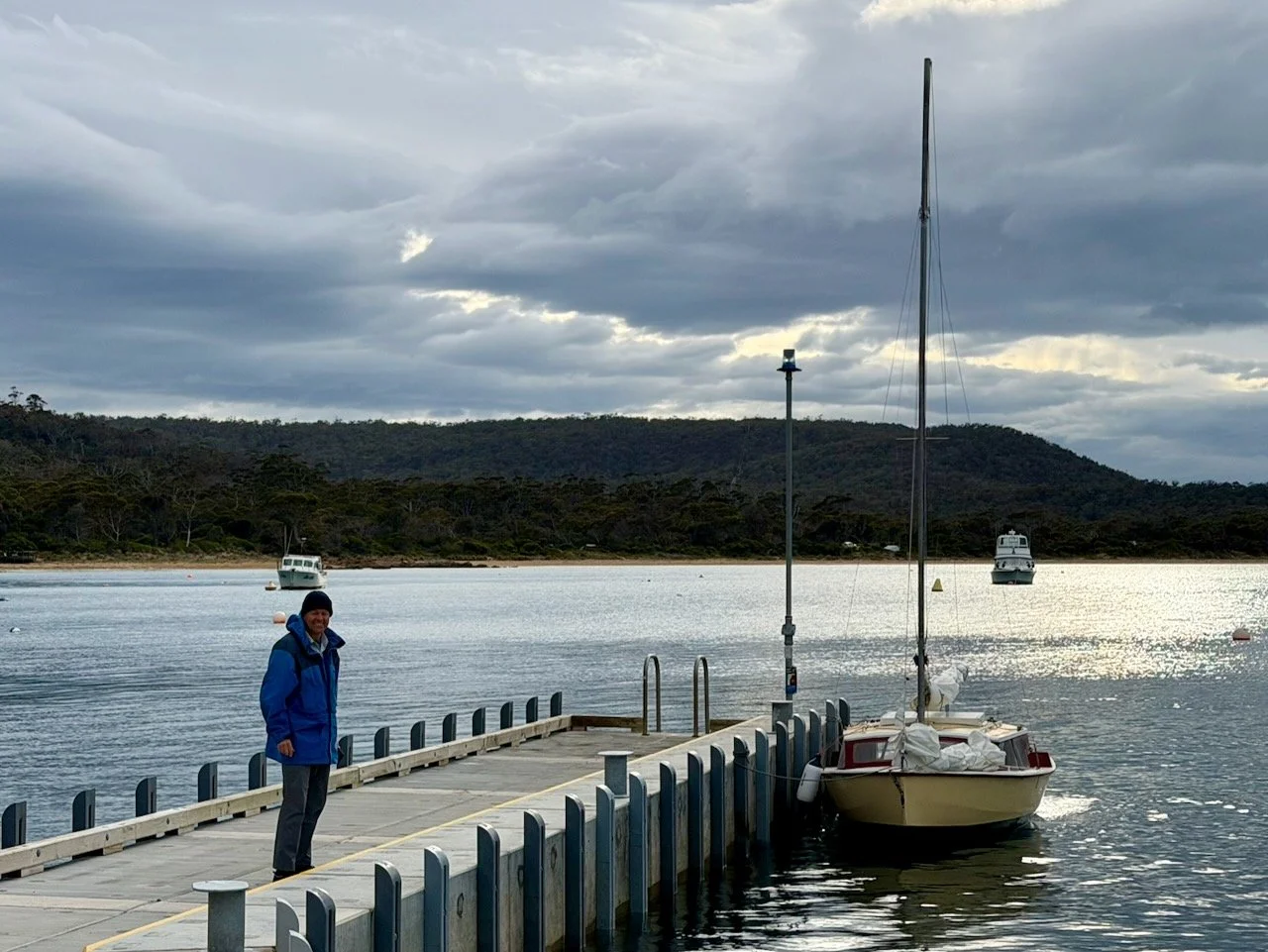
Deckee showed green through lunchtime, then yellow after that. If we left in the morning, we’d arrive back on a rising tide—ideal for recovery onto the trailer. Waiting until after lunch meant low tide again and probably a repeat of yesterday’s launching headache. So we decided to go early.
Motoring out initially, we were pushing into a northwesterly wind, and Manuka was hard to control. Once clear enough, we hoisted sail and began tacking into Great Oyster Bay. Slow at first, with patchy control. There may have been current involved—we’re still not sure. We made progress on the southwest tack, but lost most of it when turning north. Eventually, once we were well into the bay, the angle finally gave us a direct westerly run with a stronger northwesterly.
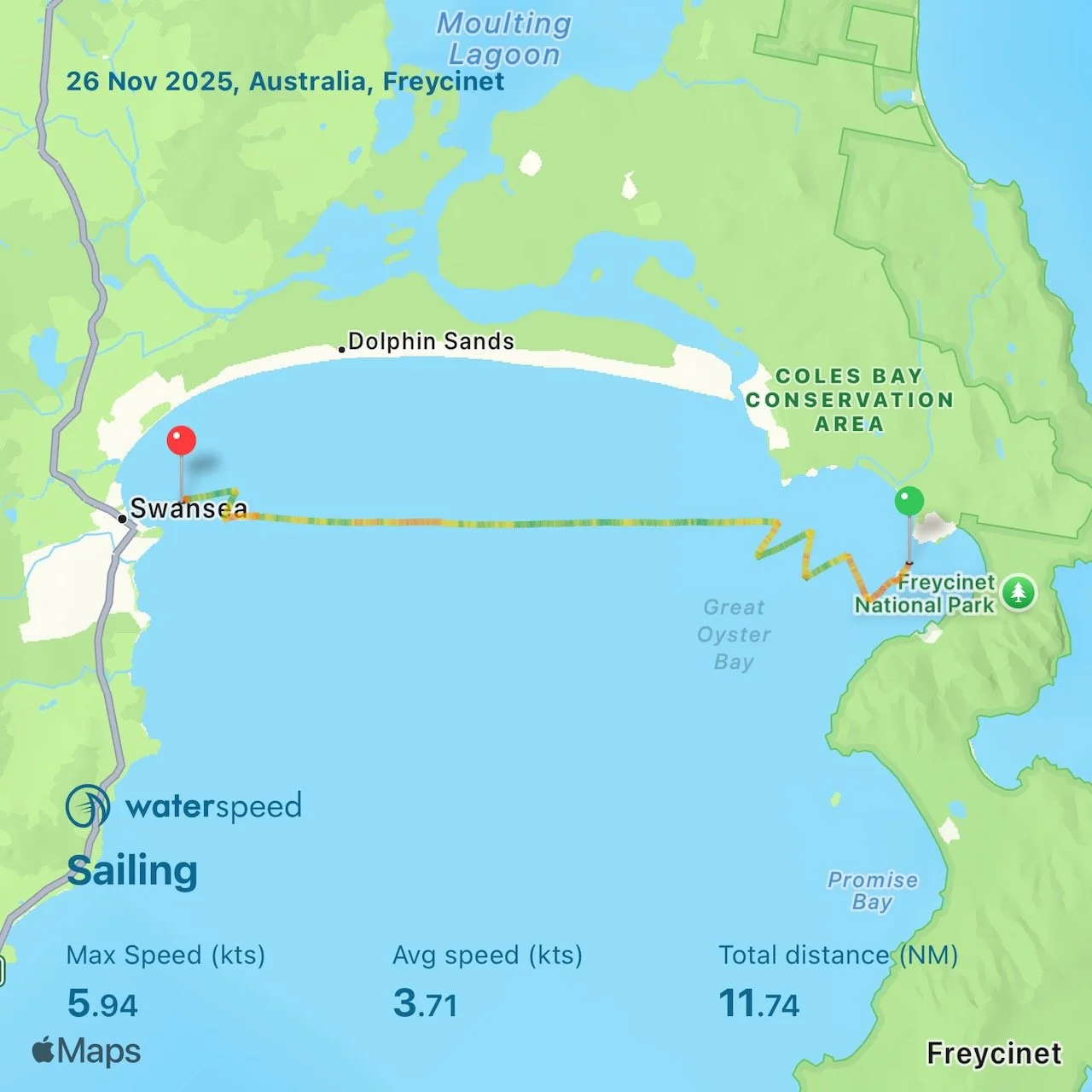
That part was fun. We hit good speed—frequently doing above 5 knots.
Close to Swansea, a pod of dolphins appeared. I saw two; Col swears he saw three. They surfaced near the boat twice, silent and sudden, and then disappeared. We didn’t have time for a photo..
Approaching Waterloo Point we needed one final tack, which cost us some momentum, but soon after we dropped the sail and motored in. The tide was up and the recovery was smooth—a relief after the previous day.
Lessons Learned
This was absolutely a learning trip. Plenty went right, but nothing teaches you faster than a bit of discomfort.
A few takeaways:
We need to practice anchoring before attempting another overnight trip.
Forecasting isn’t just rain and wind—tide, swell, and currents matter a lot.
And even in rough moments, dolphins somehow make everything feel worthwhile.
Despite the discomfort and seasickness, it was still a proper adventure. And after weeks stuck on land, that alone felt pretty good.